
CELEBRITY
UPFATE:This Just Happened: Native Leader Mary Peltola Takes the Lead in Alaska’s Senate Race

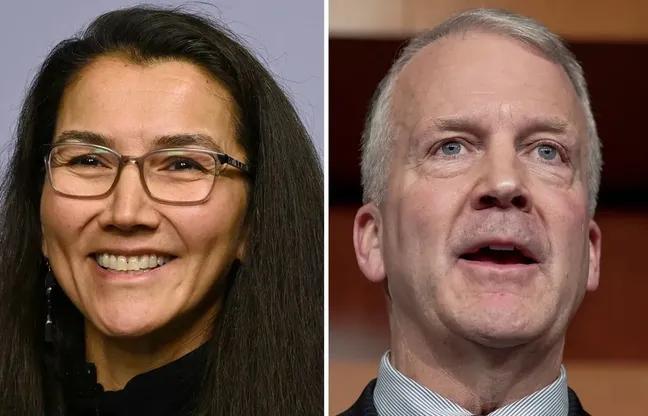
UPFATE:This Just Happened: Native Leader Mary Peltola Takes the Lead in Alaska’s Senate Race
Immediately after announcing her run for senate in Alaska, Native American Mary Peltola raised $1.5 MILLION. She is already polling AHEAD of Republican Dan Sullivan and is the current favorite to WIN….full details ⤵️
Former U.S. Representative **Mary Peltola**, a lifelong Alaskan and the first Alaska Native elected to Congress, has officially launched her campaign for the **2026 U.S. Senate seat in Alaska**, challenging two‑term Republican incumbent **Senator Dan Sullivan**.
In a standout start, Peltola raised **about $1.5 million within the first 24 hours** of her campaign launch — a significant haul fueled largely by small‑dollar donors, with roughly 96 % of contributions under $100. Her fundraising on day one exceeded Sullivan’s last quarter take and signals strong early grassroots support.
Almost immediately, polling has shown Peltola **neck‑and‑neck or slightly ahead of Sullivan in a head‑to‑head matchup**. A recent survey conducted just before her announcement found Peltola at approximately **48 % to Sullivan’s 46 %**, with a small share undecided. While the race remains very close and polls are early, this suggests she is competitive in what has traditionally been a Republican‑leaning state.
Peltola’s campaign message blends her personal Alaska story with policy priorities focused on lowering living costs, strengthening rural communities, and advocating for bipartisanship in Washington. Her “Alaska First” approach references local concerns — like fisheries and the high cost of everyday goods — and aims to appeal to independent and moderate voters in Alaska’s unique ranked‑choice voting system.
For Democrats nationally, Peltola’s candidacy represents a potential breakthrough in a deep‑red state and is part of a broader strategy to flip key Senate seats in 2026. For Republicans, Sullivan remains a well‑funded incumbent with strong ties to his party’s base. The outcome in Alaska could play a notable role in determining control of the U.S. Senate after the midterms.
–

BREAKING: COURTROOM CHAOS T.R.U.M.P’S EPIC MELTDOWN AFTER JUDGE’S SHOCKING FINAL VERDICT — IS THIS THE GAME-CHANGING RULING THAT’S CRUSHING HIS DEFENSE, SPARKING ALL-OUT WAR WITH THE BENCH, AND UNLEASHING A POLITICAL TSUNAMI

BREAKING; BOMBSHELL DECLARATION JACK SMITH DECLARES PROOF BEYOND DOUBT ON TRUMP CRIMES — “I’d Charge Any Ex-President” Ignites Arrest Calls in Escalating Scandal Storm!

BREAKING: TV TAKEDOWN MIKE JOHNSON’S “STAY SILENT” ORDER BACKFIRES LIVE — BARACK OBAMA EXPOSES EVERYTHING in Calm, Devastating Dismantling!

BREAKING: HISTORIC BLINDSIDE BOMBSHELL: CONGRESS IMPEACHES DONALD TRUMP In SHOCKING VOTE — EPSTEIN FILES Cover-Up Triggers Bipartisan Betrayal and Total Meltdown!

BREAKING: Judge EXPOSES Trump’s SEALED verdict as Congress DEMANDS IMMEDIATE ARREST!!

BREAKING: SUPREME COURT REJECTS TRUMP’S APPEAL — IT’S OVER! Donald Trump has just suffered what may be the most devastating legal defeat of his political career. In a 7–2 ruling, the Supreme Court flatly rejected Trump’s claim of presidential immunity — and most strikingly, justices he personally appointed voted against him.

THE FUSE HAS BEEN LIT ON THE MOST DANGEROUS LEGAL BATTLE IN U.S. HISTORY AS CONGRESS PREPARES FOR AN UNPRECEDENTED TRIAL. A historic tipping point has been reached today as 140 lawmakers officially signaled they are ready to put the presidency on trial to save the Constitution from total collapse. The atmosphere in D.C. is described as pure electricity with even veteran politicians admitting that the current push for impeachment has reached a level of urgency that cannot be ignored or tabled. This is a moment that will define the next decade of American life and we have the deep dive on every major development happening tonight. The full article is in the comments.

BREAKING: TRUMP’S DARKEST SECRETS Just ERUPTED — EPSTEIN FILES DATA SET 8 Drops BOMBSHELL Clues!

JUST IN— 40 MINUTES AGO: Special Counsel Jack Smith has publicly released every piece of material in his possession linked to Donald Trump, revealing exactly where the files are being uploaded. The move is being framed as a bold push for full transparency and institutional credibility—and it’s already sending shockwaves through Washington, Jim Jordan and Donald Trump are panicking…

BREAKING: SENATE SHOCKER: KRISTI NOEM CONVICTED On IMPEACHMENT — House Ignites TOTAL FIRESTORM With Explosive Vote Escalation!

JUST IN: 30 MILLION VIEWS IN 1 HOUR: OBAMA BREAKS THE INTERNET BY DECLARING TRUMP THE BIGGEST THREAT TO AMERICA TODAY In a recent interview, when asked what poses a bigger threat to America right now — Islamophobia or jihadist violence — former President Barack Obama didn’t name either. His response: “Donald Trump.”
