
CELEBRITY
MAJOR BREAKING: U.S. Senate officially passes a resolution to block President Trump from taking further military action in Venezuela without congressional approval…

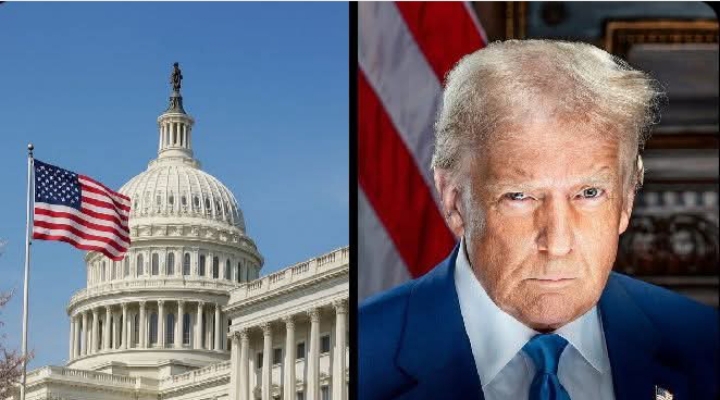
MAJOR BREAKING: U.S. Senate officially passes a resolution to block President Trump from taking further military action in Venezuela without congressional approval…
**WASHINGTON, D.C. —** In a rare rebuke of President *Donald Trump’s* foreign policy, the **U.S. Senate on Thursday voted 52–47 to advance and effectively pass a war powers resolution** that would bar the president from initiating further military action against **Venezuela without explicit congressional authorization**. The measure marks a significant assertion of legislative authority over the executive branch’s use of force.
The resolution, **sponsored by Democratic Senator Tim Kaine and supported by bipartisan backers**, passed with the unexpected support of **five Republican senators**—a key factor in its narrow victory.
Senators voting in favor insisted that the Constitution entrusts Congress—not the White House—with the power to declare war, and that the **recent U.S. military operation in Venezuela**—including the capture of Venezuelan President Nicolás Maduro—underscored the risk of unchecked presidential military authority.
“**Congress must not be sidelined when the United States sends its forces into harm’s way,**” one supporter said on the Senate floor, echoing a growing concern among lawmakers about executive overreach.
President Trump, who has defended the original Venezuela operation and dismissed the measure as undermining national security, is expected to **veto the resolution if it reaches his desk**. Even so, the Senate’s action signals deep bipartisan unease in Congress over unilateral military engagements and could shape U.S. foreign policy debates in the months ahead.
The resolution must still clear the **House of Representatives** before becoming law, where its prospects remain uncertain given Republican leadership’s alignment with the administration. If passed by both chambers and vetoed by the president, lawmakers would need a two-thirds majority in each house to override the veto—an uphill challenge.

JUST IN: President Trump just tried to publicly intimidate the Chair of the Federal Reserve and in doing so, he accidentally reminded America why the Fed exists, inadvertently turning its chair into a quiet institutional hero.

BREAKING: Remember when Jerome Powell corrected Trump’s math on national television, live, and called out his disinformation. Trump is still holding a grudge Jerome Powell just torched Donald Trump after the DOJ opened an investigation into Powell. Everyone needs to see this….

BREAKING: President T.r.u.m.p.’s voice boomed across a packed White House briefing room, eyes gleaming with triumph: “Canada has 30 days to tear down every barrier—or CUSMA dies, and their economy with it.”

JUST IN: FEDS OPEN CRIMINAL PROBE INTO POWELL AS TRUMP–FED WAR ESCALATES

BREAKING: DENMARK & GREENLAND TO HOLD TALKS WITH U.S. Denmark and Greenland will meet with U.S. officials this Wednesday, and while the agenda isn’t public, the stakes almost certainly are.

BREAKING: JAKE TAPPER just told the truth out loud on live TV. He brought the receipts showed Jan. 6 rioters attacking police, then reminded Kristi Noem that Trump pardoned them all.

BREAKING: DHS now classify terrorism as “driving a car in a manner Kristi Noem finds suspicious.” Congrats America. Parallel parking is now a national security threat.

JUST IN:30 minutes ago, tension surged on Capitol Hill after special counsel Jack Smith formally demanded that Rep. Jim Jordan release the full video of his eight-hour, closed-door testimony before the House Judiciary Committee.

BREAKING: European countries, led by the UK and Germany, are planning to deploy troops to Greenland – Bloomberg

JUST IN: President Trump says “if we don’t take Greenland, Russia or China will, and I’m not letting that happen.” “Their defense basically is two dogsleds.”

JUST IN: Supreme Court Blocks President Donald Trump from Taking Any Further Military Action in Venezuela Without Explicit Approval from Congress, Ordering an Immediate Freeze on Resource and Oil Exploitation Plans
