
CELEBRITY
BREAKING: Supreme Court Orders Ignored as Donald Trump Moves Forward With Executive Action and Attempts to Federalize National Guard Without State Approval Despite Supreme Court order and Rejection

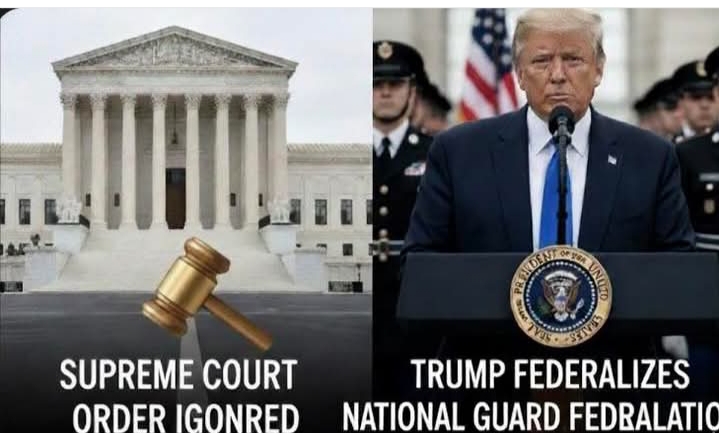
Supreme Court Orders Ignored as Donald Trump Moves Forward With Executive Action and Attempts to Federalize National Guard Without State Approval Despite Supreme Court order and Rejection
Tensions between the executive branch and the judiciary intensified this week as former President Donald Trump moved forward with sweeping executive actions that critics say directly challenge Supreme Court authority and long-standing constitutional limits on federal power. Despite reported Supreme Court resistance and legal rejections, Trump has continued efforts to assert federal control over National Guard units without the consent of state governors.
Legal analysts note that the National Guard traditionally operates under a dual federal–state framework, with governors retaining primary authority unless units are formally federalized under clearly defined legal circumstances. Supreme Court precedent has consistently emphasized that such federalization requires adherence to statutory limits and respect for state sovereignty. Attempts to bypass those requirements, experts warn, risk undermining the balance of power embedded in the Constitution.
According to court filings and public statements, Trump’s legal team has argued that extraordinary national conditions justify expanded executive authority. However, the Supreme Court has reportedly pushed back, signaling that emergency powers do not override constitutional constraints or judicial oversight. Critics argue that ignoring or minimizing these rulings sets a dangerous precedent, eroding the rule of law and weakening judicial independence.
State officials from both parties have expressed concern, warning that unilateral federal action could provoke constitutional crises and strain civil-military relations. Governors have emphasized that National Guard units are deeply integrated into state emergency response systems and should not be commandeered without lawful process and cooperation.
Supporters of Trump contend that strong executive action is necessary to address national security and public order challenges, accusing the courts of overreach and delay. Opponents counter that defiance of Supreme Court decisions threatens democratic norms and risks transforming temporary political disputes into lasting institutional damage.
As legal challenges continue, the situation highlights a broader struggle over the limits of presidential power and the role of the judiciary as a check on executive authority. Whether the courts can effectively enforce their rulings—or whether political pressure will prevail—remains a defining question for American constitutional governance.

BREAKING: A law firm in Minnesota vows its lawyers will make Minneapolis the richest city in America suing “every single ICE agent who violates a Constitutional right, assaults a citizen, makes an unwarranted arrest, uses excessive force, or refuses to self-identify.”

JUST IN: Donald Trump says he regrets not ordering the National Guard to seize voting machines after losing the 2020 election.

JUST IN: Donald Trump Warns NATO That Continued Opposition to U.S. Greenland Ambitions Could Force America to Withdraw Troops, Cut All Funding, and Potentially Leave the Alliance Entirely, Sending Shockwaves Through Transatlantic Relations

JUST IN: Republican Senator Thom Tillis announced that he will be blocking all future Federal Reserve nominations put forth by Donald Trump because of the investigation into Jerome Powell.

BREAKING: Powell basically said the quiet part out loud: the Trump admin’s push to control the Fed is built on false pretenses. The Fed is meant to be independent so politicians can’t game the economy. Losing that independence would be bad news.

JUST IN: Democrat Mary Peltola, the 1st Alaska Native in Congress, has announced her campaign for the U.S. Senate. Democrats just struck a diamond mine with her….

JUST IN: President Trump just tried to publicly intimidate the Chair of the Federal Reserve and in doing so, he accidentally reminded America why the Fed exists, inadvertently turning its chair into a quiet institutional hero.

BREAKING: Remember when Jerome Powell corrected Trump’s math on national television, live, and called out his disinformation. Trump is still holding a grudge Jerome Powell just torched Donald Trump after the DOJ opened an investigation into Powell. Everyone needs to see this….

BREAKING: President T.r.u.m.p.’s voice boomed across a packed White House briefing room, eyes gleaming with triumph: “Canada has 30 days to tear down every barrier—or CUSMA dies, and their economy with it.”

JUST IN: FEDS OPEN CRIMINAL PROBE INTO POWELL AS TRUMP–FED WAR ESCALATES

BREAKING: DENMARK & GREENLAND TO HOLD TALKS WITH U.S. Denmark and Greenland will meet with U.S. officials this Wednesday, and while the agenda isn’t public, the stakes almost certainly are.
